

So, I got up at 4am to hear the new guy at the Fed speak at his first live meeting. Was it worth it? I’m a huge fan of moving away from the post-GFC hand holding of forward guidance, but taking this away obviates the need for 95% of the communication schedule that the Fed used to run in the forward guidance world.
It’s tough to expect much when he intentionally doesn’t want to say anything. There were a few rehearsed portions that caught my ear though.
I think there was a missed impression by some in financial markets, by some households and businesses, that Central Bankers like me, we set a 2% inflation target but maybe we were more tolerable of a somewhat higher inflation target and in economics we would call that the “revealed preference” so might it have been rational for people to think, well their inflation targets somewhat higher.
What I heard in the last two days, what I’ve heard in the eight and a half weeks is “no.” We will deliver the 2% inflation target. That is the Committee’s definition of price stability.
OK. Again, as with the post below, I argued that he never sounded hawkish during his first press conference, but that he was just good at saying what he should say as a “tough” central banker.

So, saying things like he did above just reinforces that, but doesn’t tell us anything about what sort of pressure he will put on the rest of the board.
It also shows a keen understanding of where market opinions are. He was a hedge fund manager (and good friends with Druck), so no surprises.
The rest of the content was Mr Warsh just saying that markets are doing the tightening for us, and this refers to the work both real and nominal yields are doing to slow the economy through their brisk rise.
On balance, he sounds less likely to hike to me than most think. Keep Treasury borrowing costs low at the short end and let longer yields rise to slow the economy.
The market rewarded Warsh’s adoration of the long end of the yield curve by handing the Fed a little more of that, with 30-year bond yields breaking to new highs.
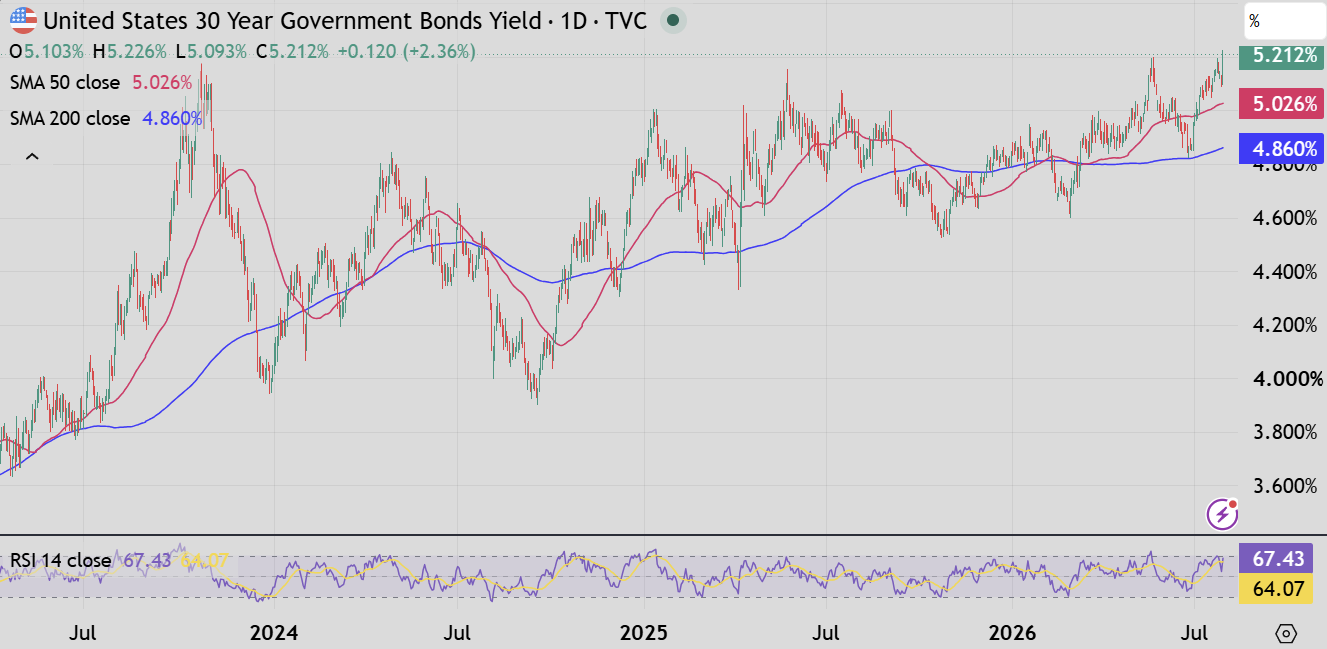
Nominal 30-year yields have risen about 25bp this year. This has all been in the real component as illustrated by TIPS yields below.
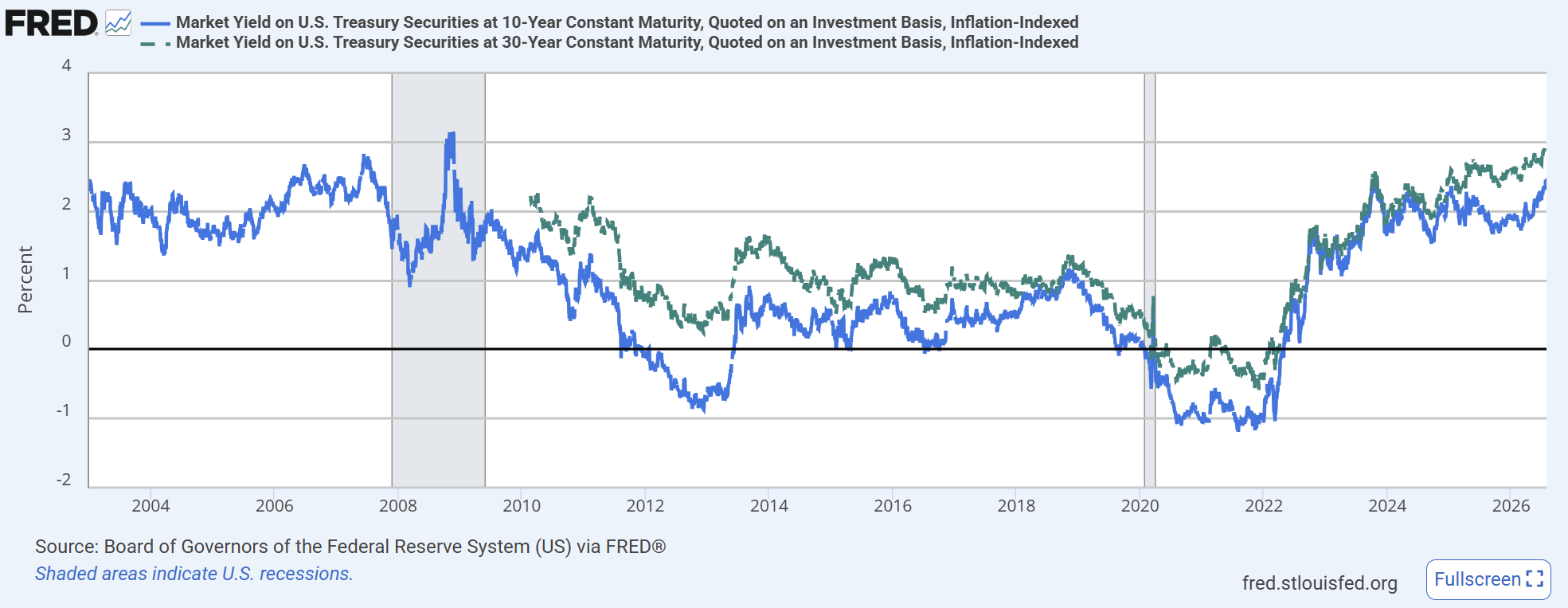
TIPS are funny instruments and should only be used for educational purposes most times due to their poor liquidity (especially at the 30-year point of the curve), but the direction is something we should pay attention to.
If there is any good news, it is that market-based measures of inflation are showing no issues. This was the best evidence that there wasn’t going to be a movement today. 1-year inflation swaps were <2% before the meeting.
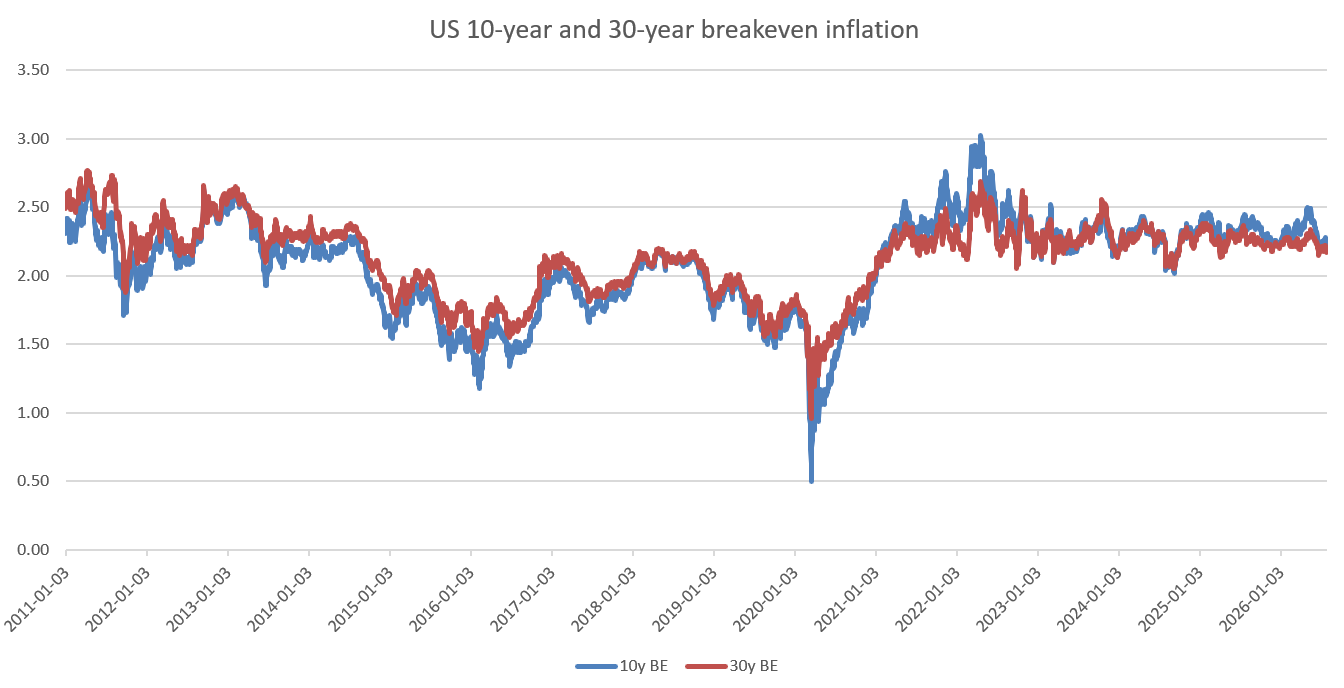
Breakeven inflation (nominal minus real) and ZCS (inflation swaps) are all very subdued.
I don’t think this is unwarranted. Put aside Iran and oil, it does look like underlying inflation is weakening, even if we are still a way away from the magic 2% number.
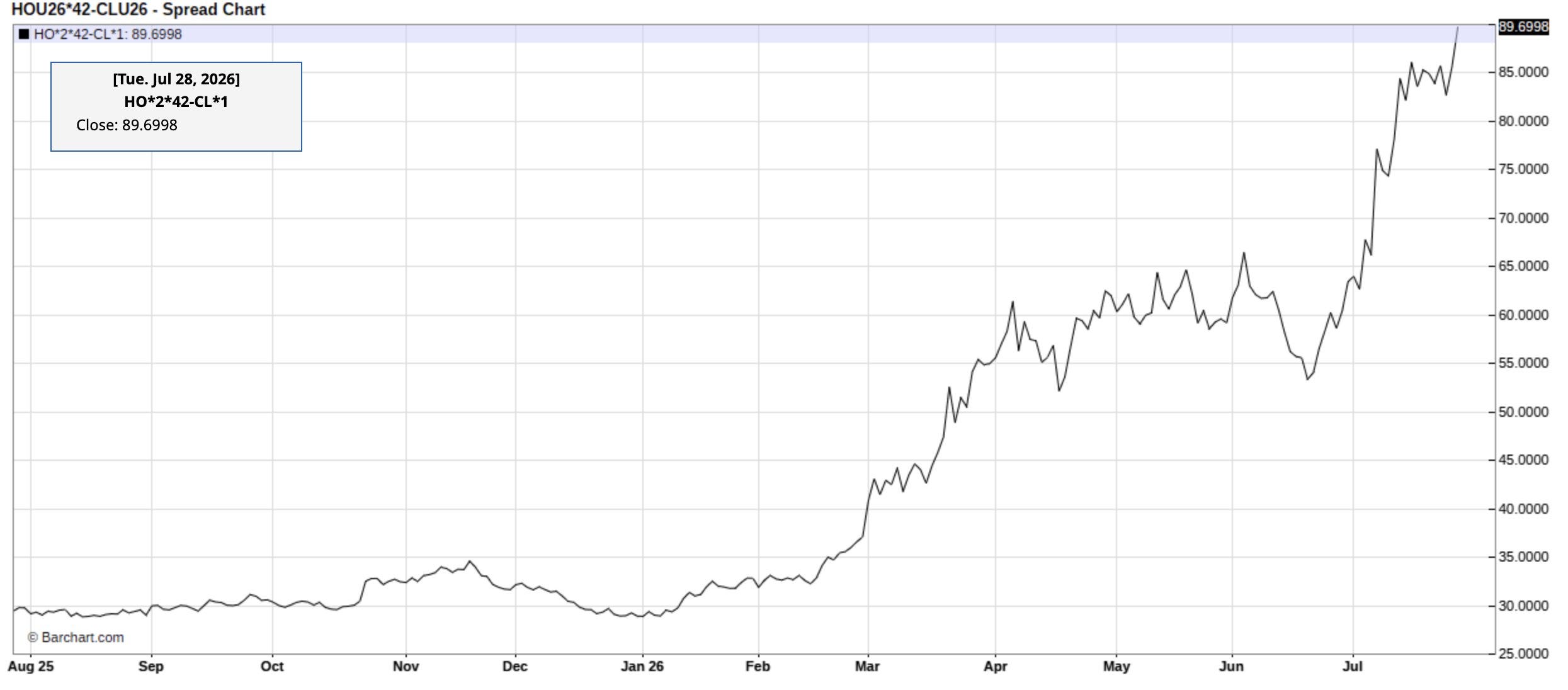
The argument about inflation is entirely forward looking, with refined product still trading at elevated levels along with refining crack margins. The risk is still there.
The market demands a short-term sugar hit
There is every reason in the world that real yields should be rising and should have risen even more over the last 6 years since the pandemic.
Real US growth is well above average, will continue to print well above average, and now has the tailwind of AI infrastructure investment as well.
The almost certain bull case for US growth

My last newsletter drew out the linkages between domestic debt accumulation and GDP growth. It’s time to put those conclusions to the test.
I’ve said it a million times - fiscal largesse is a magnitude more powerful than monetary policy. And fiscal continues to punch along with ~6% fiscal deficits year after year.
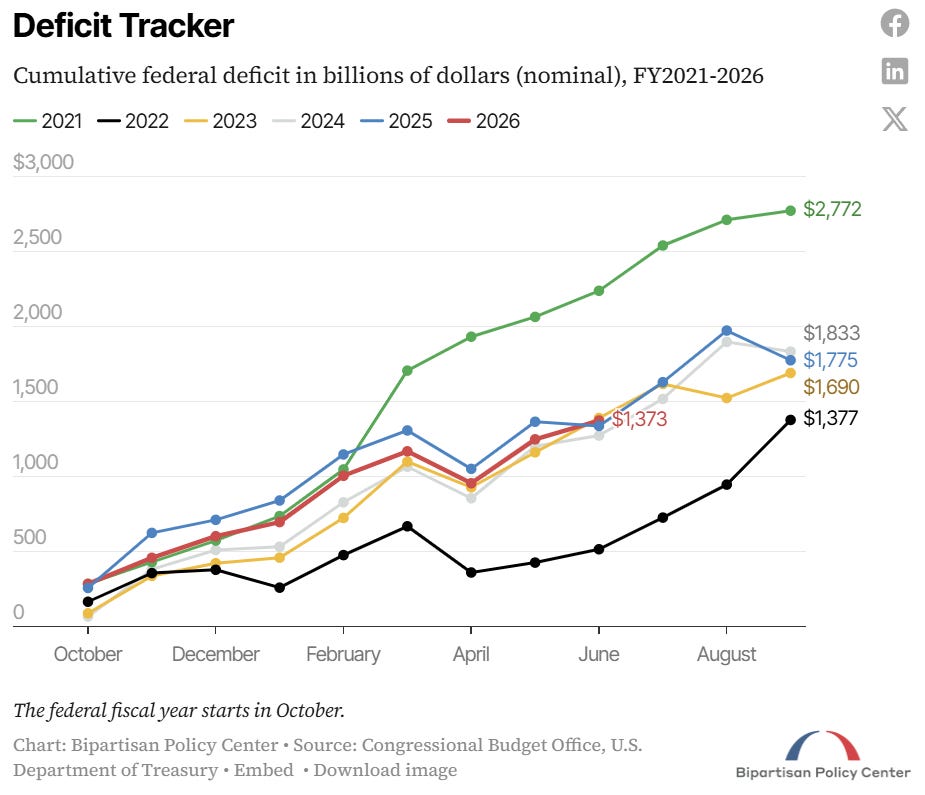
Real yields are the natural handbrake that exists to stop an economy setting itself on fire due to accelerating inflation or, more importantly, bad credit growth. Rising real yields helps to put a cap on borrowing, forcing a higher hurdle rate for investments and a slowing of accelerating asset prices.
This works in the same way as floating rate currencies help to reduce international imbalances before they become too much of a problem. The market should exist as a natural stabiliser before crisis occurs.
These natural functions are, unfortunately, seen as an annoyance in the current political climate. This applies both to China (currency) and the western world (perceived yield ceilings).
The equity market, geared to want accelerating asset prices, hates rising real yields, and it registered its disappointment after the press conference despite there being no rate hike.
This normally wouldn’t be a problem, unless of course the equity market has an oversized effect on policy.
I don’t necessarily disagree that rising real yields with contained market-based inflation measures are a bad thing. In the US they are more effective than hiking short rates to achieve the same thing. The point of hiking short rates is to put pressure on the longer end of the curve.
There is also the side benefit of making the banking sector more profitable with a steeper yield curve.
Government bond issuance focussed on bills means that interest costs can also be kept low while still achieving some control over inflation. Issuing short however also increases the stimulatory effect of fiscal spending, making the necessary real yield rise even greater.
The green light was already shining to sell rates, and nothing has changed today. If it happens slowly enough, everyone might be OK with it.
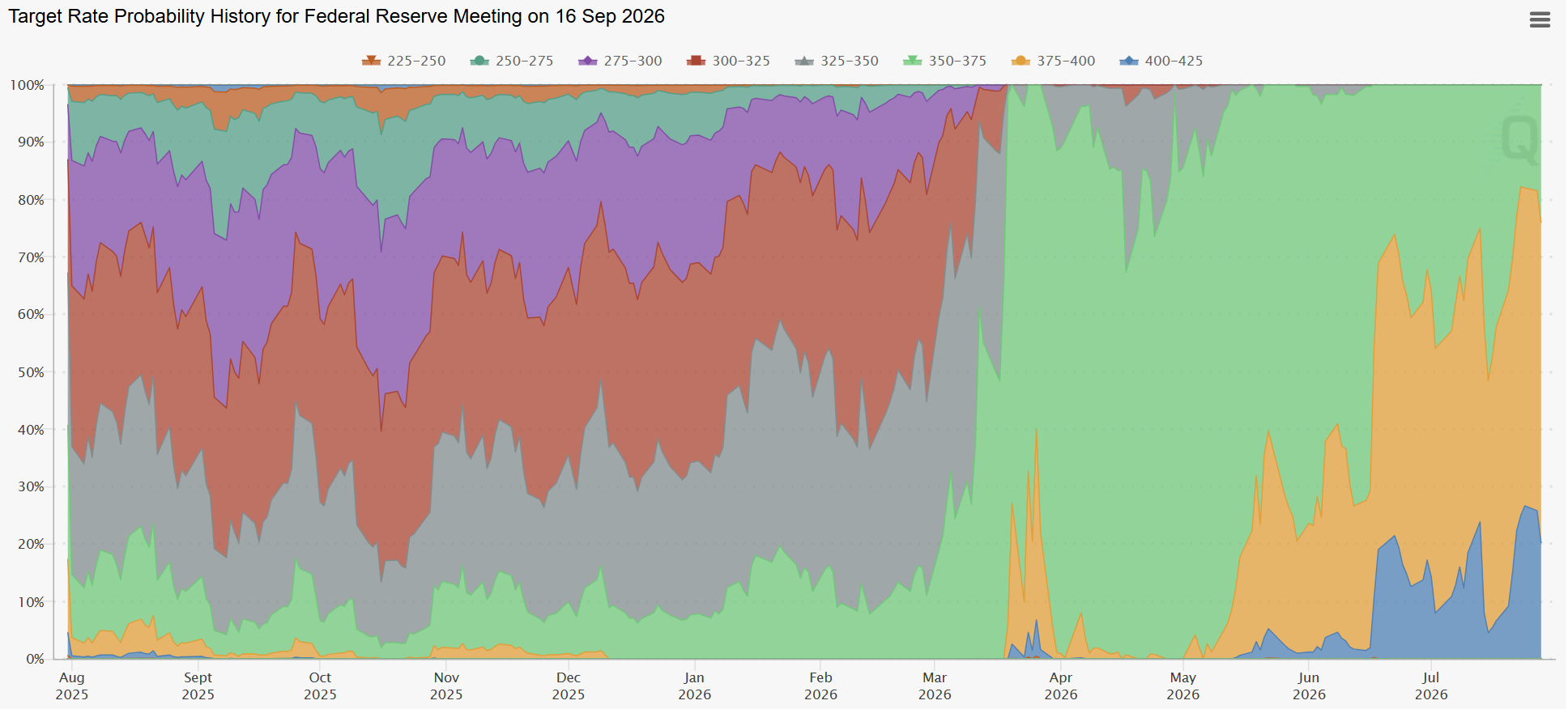
If not, we will see forward guidance come back fast. With September hold odds sitting at only 25% it looks like we’ll have a replay of this meeting soon enough.
Oil doesn't matter; do rates?

Last week’s US Producer Price Index (PPI) print in the US finally got me off the fence on bonds again. I sold a third of my max risk across the US, UK and Europe, looking to add more on a bounce. It didn’t take long but the 10% rout in crude (and a soft UK CPI) has already given me another look at it.
I’ve been short rates since the post above. Despite:
The war “ending” and
Disappointment on rate hikes
Yields are higher across the curve almost uniformly.
While not expected in the initial thesis, there is some indication now that the Fed may let long end yields drift higher.
The spoiled child
Most of the 2010s was spent trying to do the opposite through the suppression of real yields to drive investment in the face of austerity. All of these trends were most visible in Europe.
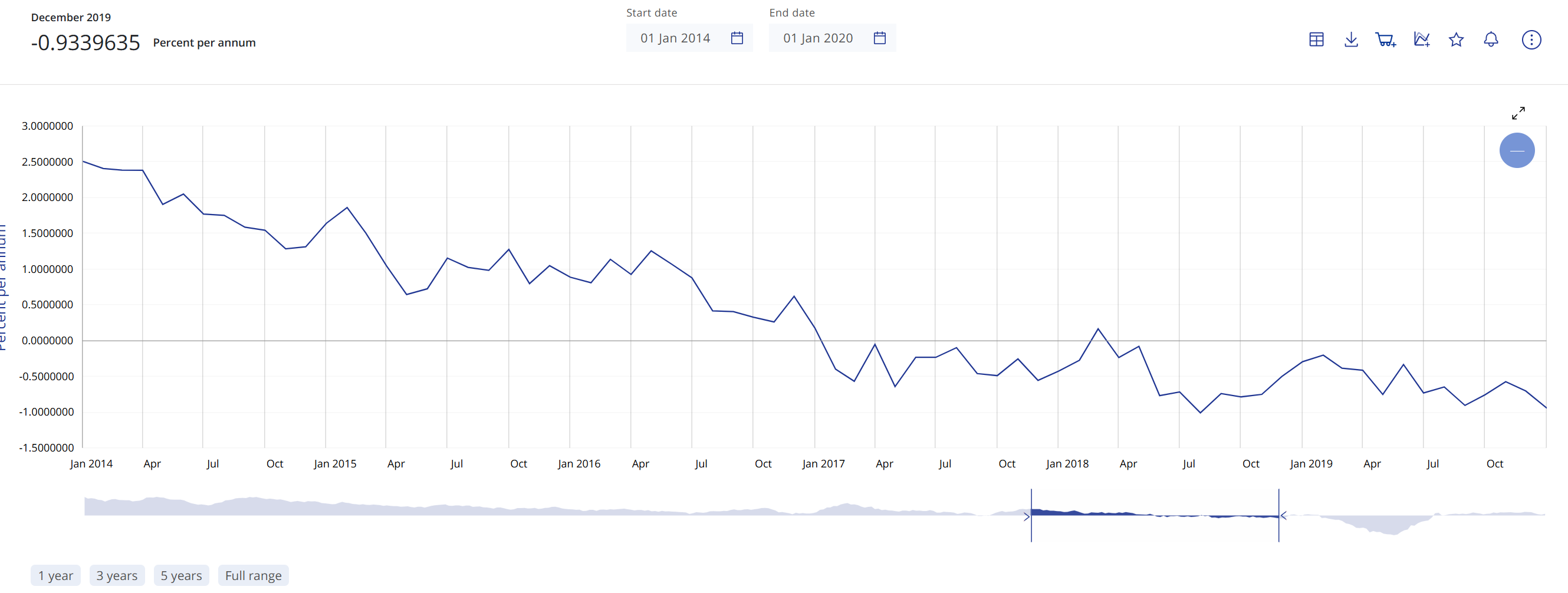
From the fallout of the Euro crisis until the pandemic, poor growth in Europe and the ECB managed to squeeze 10y real yields down in a straight line in Europe from +2.5% to -1.0%. Despite the environment, the DAX still managed to rally a modest 42% over the 6 years above. No mean feat given the headwinds Europe faced at the time.
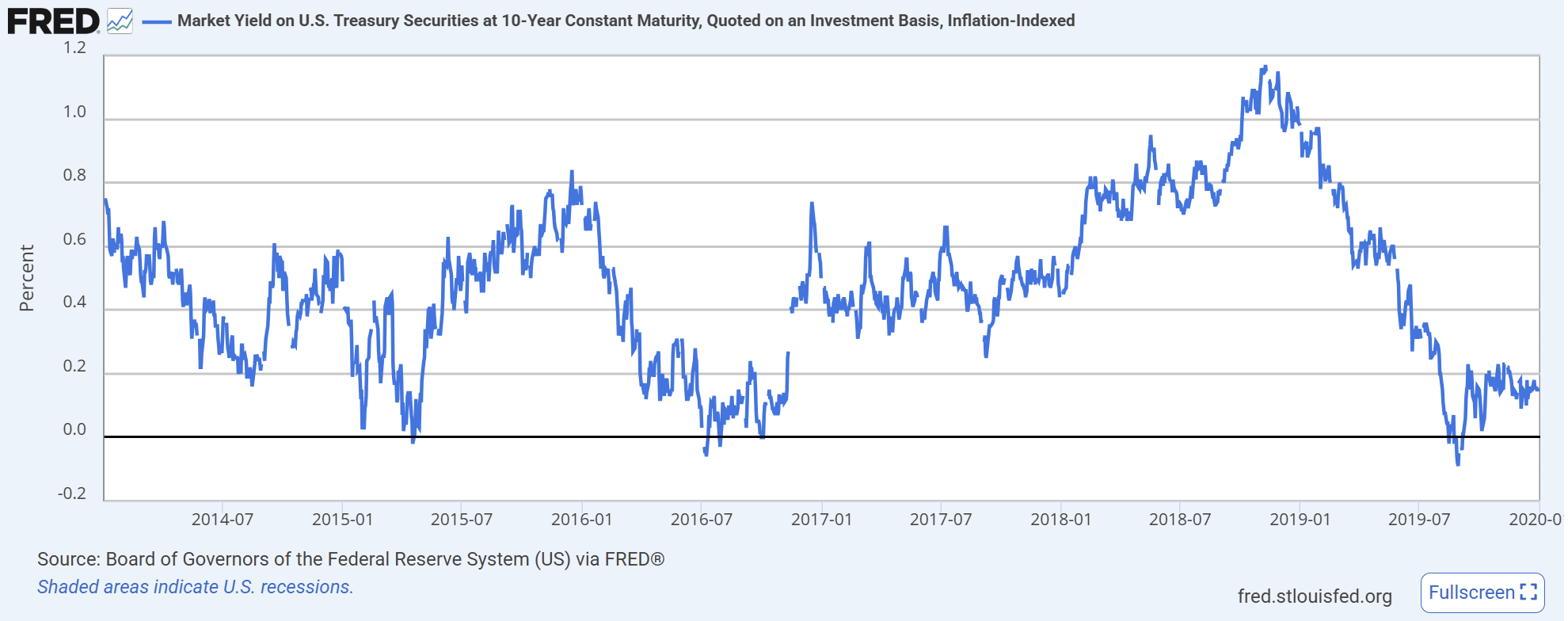
The US didn’t see the same trend, but real yields were supressed compared to where they should’ve been. Part of this was the Fed, but the pressure from Europe also had an effect here.
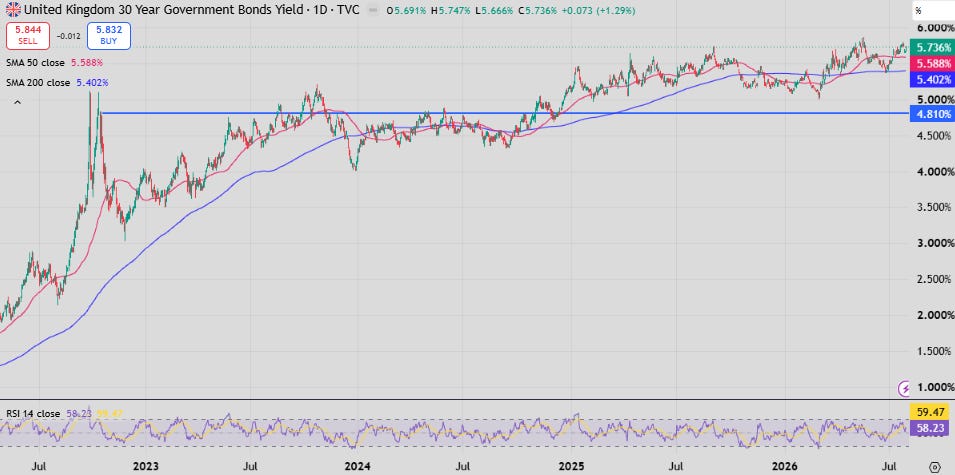
The learned behaviour for equity markets is to get upset if real yields rise was learned over this period and ended up raising a petulant child. Remember that there was a spill of a UK government’s leadership from rising bond yields. That same bond yield (the UK 30-year) is now a whole percent higher than it was then and has spent about half of the last 4 years above that level (Liz resigned in October 2022!).
Rising real yields are the best shot at achieving everyone’s medium term goals. If someone just lets it happen, like it happened in the UK, the market will get over it, and the rally will be more sustainable. It is an imagined problem and an irrational fear. Nothing will “break” because the US 30-year trades at 6%. It’s there because growth is strong, and if that’s because of debt or not it doesn’t really matter.
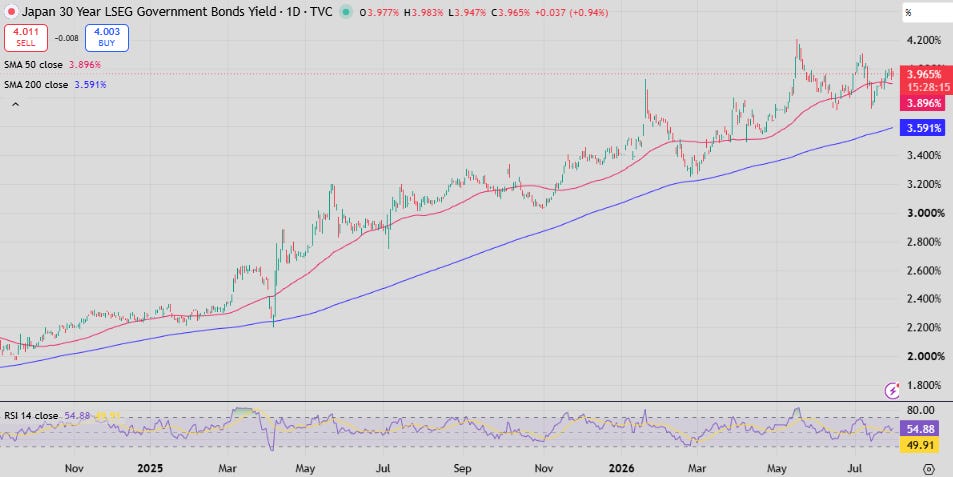
I’m sure the freak out over Japan’s 30-year bond will start again soon but it has also been mostly forgotten about for now without much real relief.
If the politicians buckle on yields like Trump did with tariffs and the war, then this is when the Fed’s job gets difficult. There is nothing wrong with letting yields rise. It is the natural pressure valve. Growth is strong. If it wasn’t, it would be a worry. That isn’t the case.
Try control it and you’ll force the pressure valve elsewhere. If it slows the economy, we might even get a business cycle back and macro may not be dead. But that sounds like wishful thinking.
“Issuing short however also increases the stimulatory effect of fiscal spending, making the necessary real yield rise even greater.”
Why does this increase the effect of fiscal spending?
another banger per usual - appreciate you