

I declined to write a Charts & Notes partially because of the noisiness of the constant hard to confirm headlines. We needed to get a resolution to the endless Truth Social posts before it was worth talking about anything.
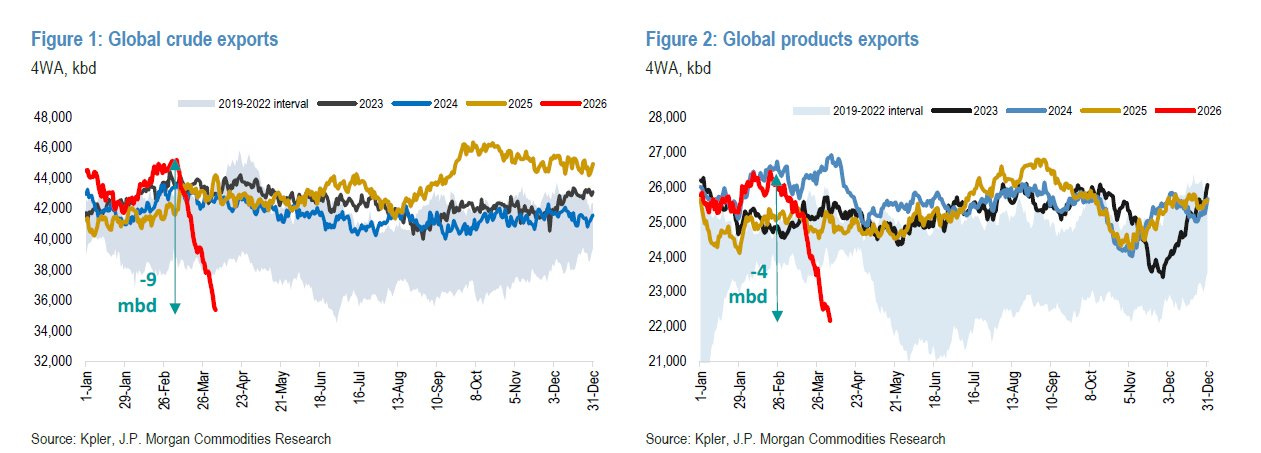
That has now cleared in probably the most unsatisfactory was possible for the global economy.
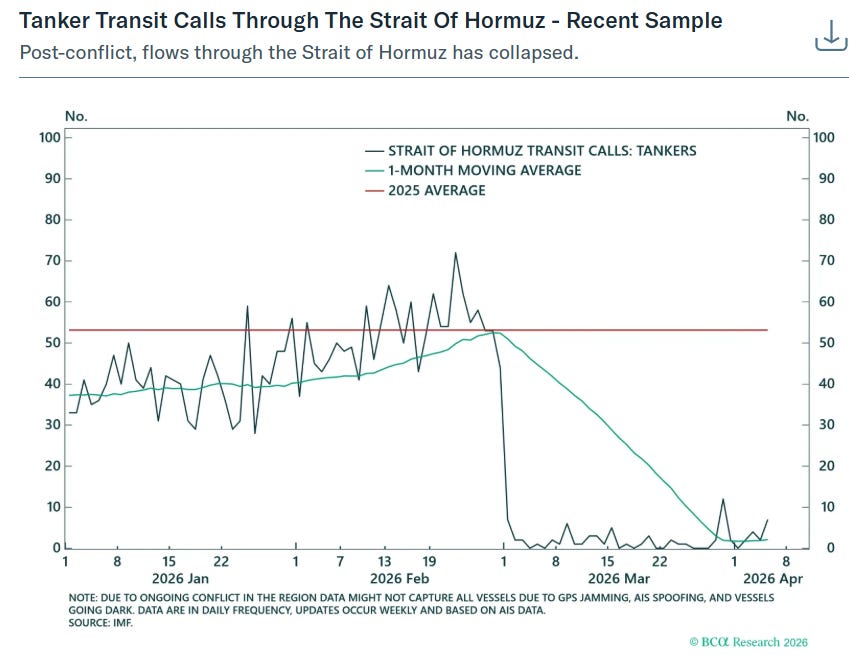
But why? There was a deal, right? At time of writing the Strait isn’t open, oil infrastructure is blowing up and on fire and war in Lebanon rages on. The ceasefire was unilateral, using the Pakistanis to give it some legitimacy. Whether Trump couldn’t stomach continuing the war because of the falling markets or just felt the voter dislike of deploying ground troops is irrelevant.
One thing is clear, however. There wasn’t the possibility of a deal before the war started, and there barely is one now given the leverage Iran has.
This is not based in a view that the US/Israel military operations were a failure. They caused an incredible amount of destruction. Or that any ground invasion would be unsuccessful. But it just isn’t enough against a regime that is prepared and just don’t care about death enough to derail their aims.
This is what eternally makes Middle Eastern wars almost impossible to win.
Equities as the warmonger
The fact that the US has walked away from the war (for now) doesn’t change anything in regard to the left-tail risks for the global economy. With the Strait still closed and further damage to oil infrastructure there is no way for physical barrels to either go around or to get to where they need to.
If it was the S&P500 that was shouting at President Trump to withdraw, it will also be the S&P500 that will beg him to send ground troops in to restore the Strait and start feeding the globe with oil once again.
Equities markets will want whatever makes them go up. This means they want the energy they need, and cheaply. That is what they will demand. It has always been the case - horrible political decisions have been forced by the market in pursuit and low volatility and profit. That is all that matters.
For the last 2 weeks the market believed that an end to the war was the best way forward to achieve this.
The collective wisdom of all market participants thought that de-escalation would result in the preservation of oil infrastructure and would offer the best way back to good times.
Collective wisdom and the power of the herd can swiftly change, however.
Think of how narrative changes in individual stocks affect how they trade. A restaurant or fast-food chain rolling out stores aggressively can be bullish, where the same company in a different circumstance could only improve its stock price by closing down stores.
The same can apply to the Iran war.
The market pushed for and will now test the strategy of withdrawal. It is obvious why this was the first choice - a withdrawal would clear up the Strait far quicker than any other option if it worked.
It will take some time for the market to find out that it is not working.
Once that happens the question won’t be “how far do stocks need to fall for Trump to force a ceasefire” it will be “how far do stocks need to fall for ground troops to be sent into Iran to open the Strait?”.
This isn’t inconsistent when the goal is so clear (get me oil) and so broad in its demand. In most jurisdictions energy isn’t a large part of the index and it is pretty much everyone outside of these guys that want to see lower energy prices.
There is another option to sending in ground troops which is a total capitulation to Iran’s demands in return for an open Strait. This seems less likely than ground troops, but you have to be aware that politics globally is swinging hard towards non-interventionalist policy so it may be a viable path and cannot be discounted.
A capitulation to Iran’s demands would change the world in far more ways than that local to the Middle East. It would also involve the withdrawal of troops from Europe and maybe even Asia. The entire world would change.

This applies to China’s role as well. There have been reports that China stepped in to ensure Iran “accepted” the ceasefire. This is something I’ve flagged many times, but words won’t be enough to say something. If Iran persists, China will have to change its stance on not being interventionalist to force a reopening. China has plenty incentive to see the global economy steam along given their exposure to global exports.
These factors are the only things stopping this resolution from being favoured by Mr. Market. The US pulling out from its “world police” role would only serve to decrease stability and increase volatility while also resulting in a higher average oil price over time even if it did make oil flow.
It is for these reasons the market will eventually choose the US finish the job that they started with a ground invasion if talks fail.

The trigger for a switch towards this role for the market is unknowable. We’ve already had a few - I wouldn’t blame you if you thought that drone attacks on the vital Saudi’s east-west pipeline would be the trigger - but it might be a failure of deal talks or something incredibly small that just tips the market over the edge. Perhaps the market is pricing success (or hope) of negotiations succeeding. At the moment Iran controls the global economy and has received the benefit of no more US strikes. It is in a strong position.
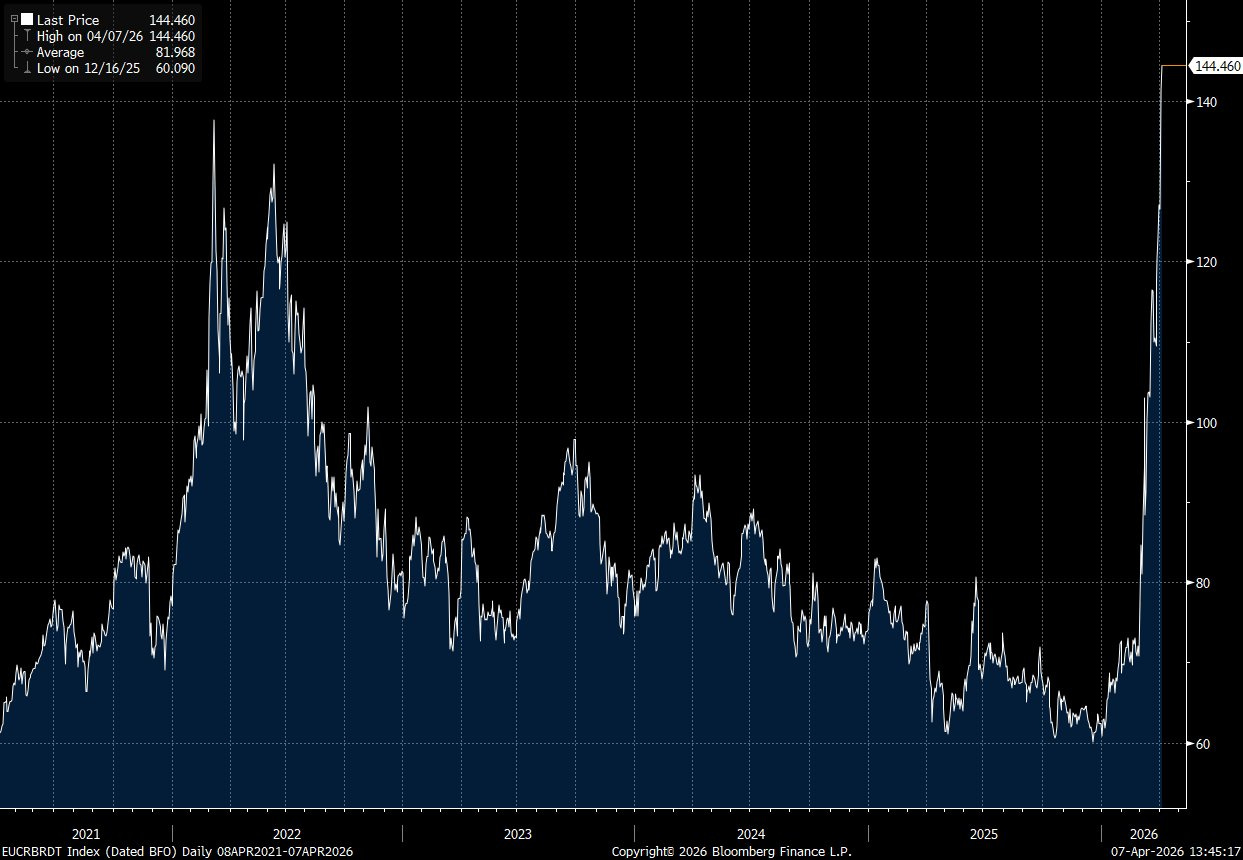
Perhaps we need to see a physical barrel of oil somewhere in the world trade hands for more than $200 (and I’m not talking about futures markets here).
The real price of oil
I’m not going to engage in the ongoing crying about manipulation in markets. Nobody is owed trending prices and low volatility one-way moves.
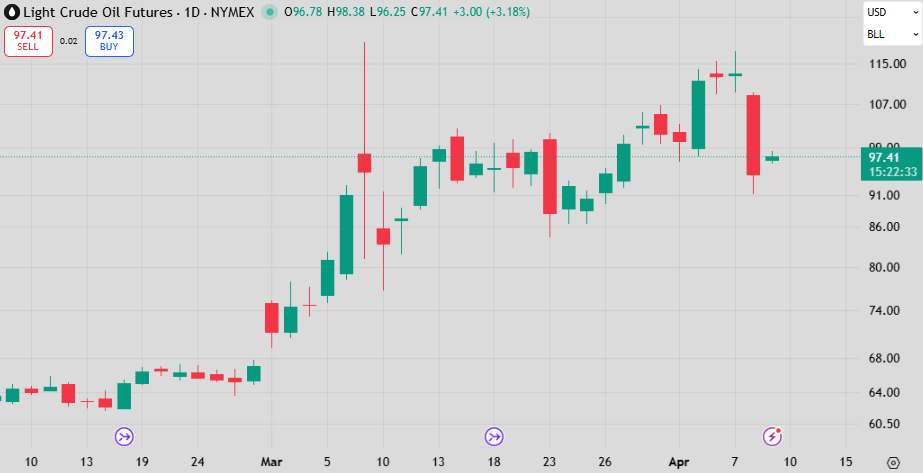
The plunge in oil prices since the ceasefire is just an adjustment of the probability weighted distribution of future returns. The distribution shifted on the news of the ceasefire whether or not there is a physical shortage or not.
Why? Not everyone who buys or sells the CL future is planning to deliver anything, so the price of physical doesn’t matter. But it can’t matter forever as eventually someone has to supply/take delivery of the barrel of oil. This makes each roll date for the futures extremely important. We saw the same thing earlier this year when gold was having its wild swings. When delivery became reality, prices surged and then tanked after.
The CL first notice date this month (rolling to the June contract) happens on the 23rd of April.
Always keep in mind what makes oil so hard to trade even in normal times. It is that last barrel that sets the price for everything. If there is 1 more barrel than needed, all of oil reprices lower to balance. The same happens in the opposite direction when there is 1 less barrel than needed.
A final word on “real” oil prices.

I’ve seen this around a lot. Technically this isn’t incorrect, we adjust most nominal prices by inflation for accurate comparison.
It is interesting to think about though. In this case, is it the right thing to do? For that we have to ask why we do it.
In the case of input costs, the right thing to do is adjust by inflation because your revenue is (hopefully) increasing by a similar amount. “Real” profit should be broadly static if volume or productivity hasn’t changed.
The problem lies in two places:
Has “real” profit increased because nominal oil prices have stayed flat?
Are you adjusting the inflation multiplier to take out the weighting to oil?
The answer to both of these is no and no. It only makes sense to inflation adjust oil if you have benefitted from it not inflating in price in the past. I don’t think that’s true.
Secondly oil as an input is so deeply embedded in everything within the CPI that it is the prime determinant of inflation. You can’t adjust a price of something so important with an input driven by itself!
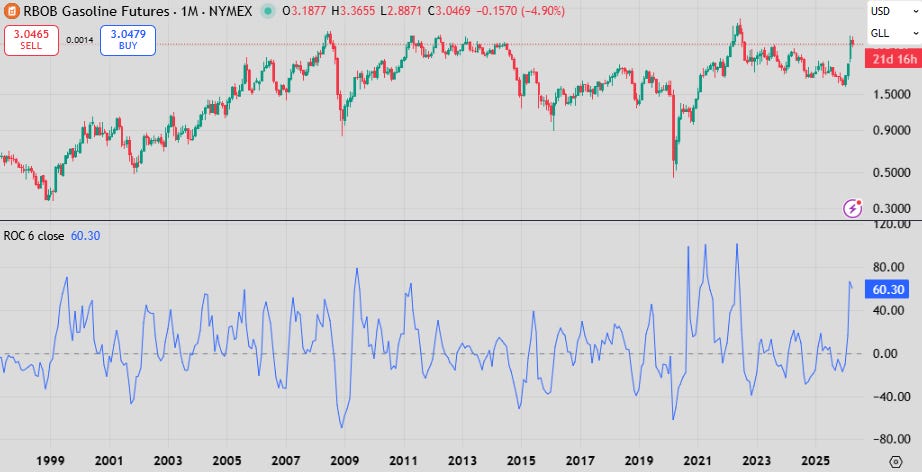
It’s also saying a 30-50% price increase on transport or delivery isn’t bad because we should have had that cumulatively over the last 10 years anyway. Clearly that isn’t going to make anyone feel better.
The aim of central bank inflation policy is to keep low, predictable inflation. There is a reason for that, and it’s because having large jumps is worse for confidence than slow predictable bumps higher.
I would go as far as to say that even the nominal level doesn’t matter. All that matters is how far it has increased in a short period of time. A doubling contributed as a trigger to the GFC. A quadrupling caused the 70s crisis.
We’re yet to find out where this one lands.
That was a really good piece, Peter. I always love to read your comments, but this one is a gem.
Interesting thoughts but I disagree that the market will push for ground troups. A renewed conflict means probably more damages on oil infrastructures and thus a multi year problem for oil supply.
The market may instead push Trump into a hard taco to get the strait opened, even on Iran terms.