

Inflation on its own isn’t enough to crater risk assets. With enough demand growth the economy can still hum along like we saw in ‘22. Despite the bearishness of multiple events in 2022 (inflation, tech bust and accelerating rate hikes), assets were volatile but there was no very large drawdown.
It will be demand destruction that is the real tail risk here, and it will bring a test for risk assets and bonds.
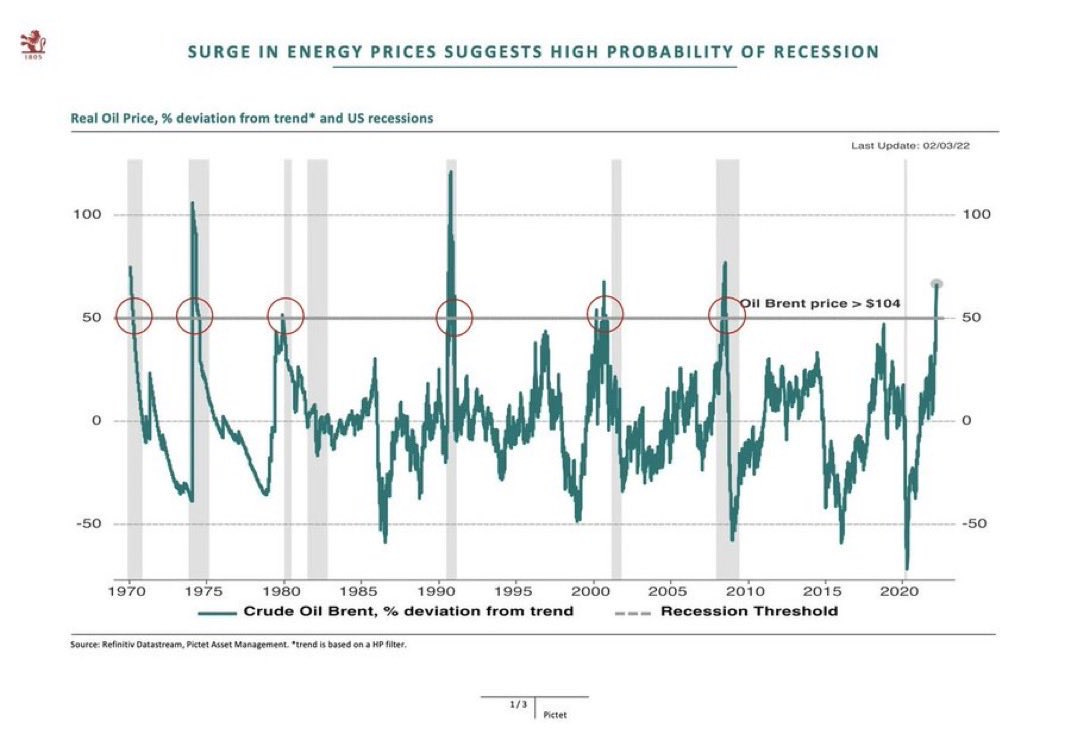
I don’t want to recite the bear case for our current situation in any detail because it’s everywhere. Suffice it to say that the cake has probably already been baked in regard to production shut-ins and increases in costs for refined product. The bearish argument is an easy one to have, and my argument last week was that any real disruption would result in a withdrawal and a re-flow of oil and gas. This can still happen of course.
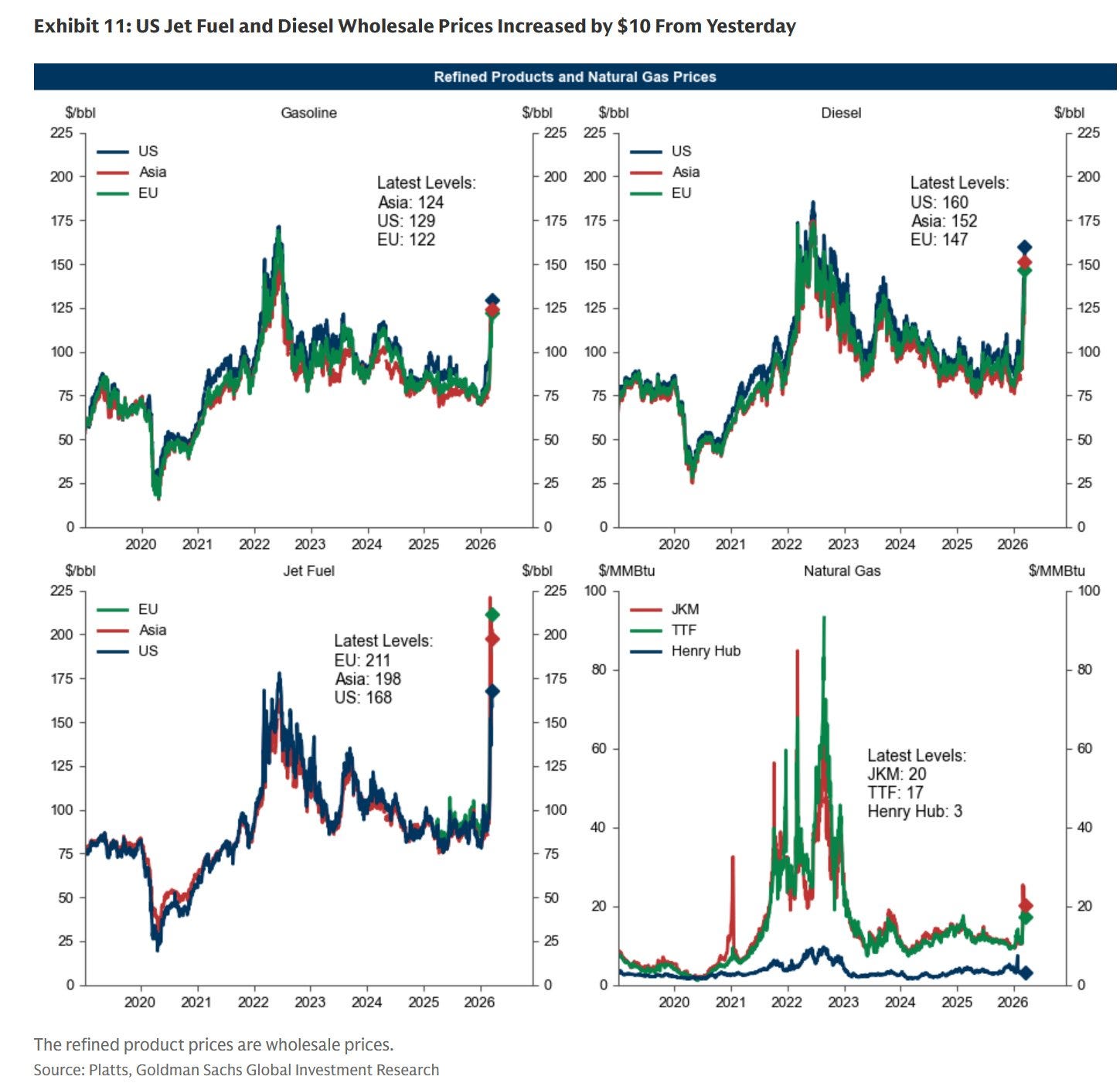
The degree of damage done by the US and Israeli strikes have the inverse effect of making exit more difficult, if it isn’t impossible already. Since it is now a matter of survival for what remains of the Iranian regime, a pull out may not get the desired effect. They are playing for keeps.
Where little discussion has been and where I think the direction of the war will go is where China and her sensitivities to the risk of a closed Strait comes in.
China, like the rest of Asia, is highly dependent on energy imports. If it wasn’t, we would probably be in WW3 already. The fact remains that China can’t decouple for two reasons:
Energy dependence
Export dependence
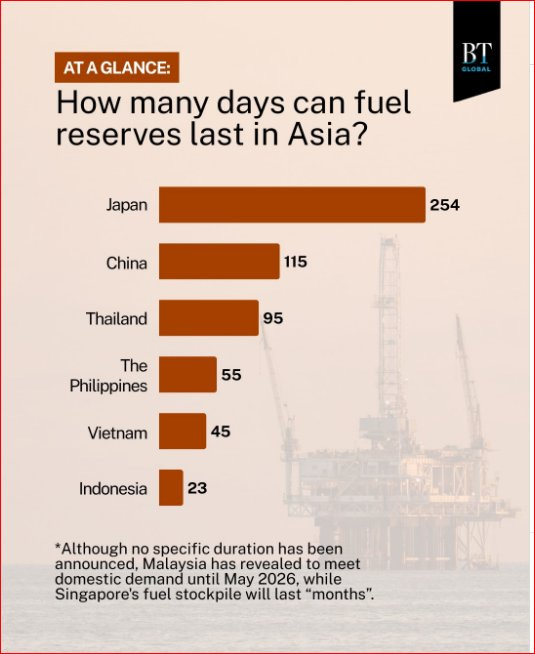
China can’t afford the same attitude that Trump has with the effect of prices surges and shortages of refined product. Yes, China reports a huge reserve of crude. At 1.2bn barrels, it is good for 120 days of supply at about a 10mbbd import rate, tempered by about 1mbbd from Iran and continuing flow from Russia.
We know China is worried about this because not only have they understandably shut down export of refined product (which many neighbours in Asia rely on) but they are slowing down refining as well which seems odd given the spike in refining margins.
This gives us some idea of the sensitivity here.
On the analysis of the war itself I can’t offer any view. All I can do is try to do is understand the incentives and leverage each player has to see what a solution looks like.
We know we are in an unstable equilibrium with energy flows effectively being stopped. We know that shortages will hurt economic growth. If it was just a matter of price, I wouldn’t be worried. Those can be absorbed. However, there is already evidence of demand destruction with airline flights being cancelled and rationing starting to take effect in smaller countries. This is only happening in transport so far.
If the oil started flowing tomorrow, it would probably be OK, and we would avoid the tail event. The effect would be on price rather than gaps on volume. This is looking less likely the more successful the US and Israel are.
This is the point that those with the most sensitivity will be pulled in to exert influence to make either side back down where there is no off-ramp.
China has that influence, but it possibly has it more with Iran than the US. Influencing Iran to reopen the Strait is more easily accomplished. In the case of a China that is unable to power itself and trading partners that are unable to buy its exports, the will certainly exists.
This leaves China in a tough situation. China also faces a poor outcome in the event that the US is to control the Strait. This might be enough to see China hang back and not exert any influence. Economic sensitivities put a timeline on them in the same way as for the rest of the world, but I would argue that it is double the effect for China when both domestic and external demand affect them greater than anyone else.
Given these dynamics, China has a clear incentive to get Persian Gulf barrels flowing again. More so than the US.
China has been an unwavering focus for Trump with nearly all of his tariff-related and military moves ultimately aimed at weakening China’s (mostly transactional) allies.
China hasn’t said nor done much up until now. The deficit on oil imports might be one that forces China’s hand in the matter. There are tactics that could escalate the situation - like forcing a devaluation of the currency (more on that below).
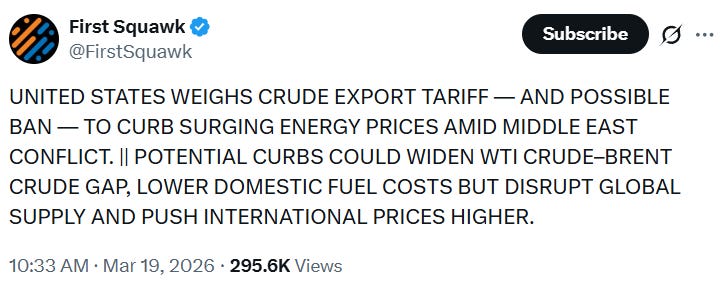
There is also the ongoing fight with European “allies” who would suffer the most in the case that the US stops exports of crude oil. Playing hardball would mean stopping exports unless help with the war effort is forthcoming. This might be European belligerence, or Europe finally playing mimicking Trump’s by not giving any concession until it’s paid for.
My tone has changed over the last week because of the degree of damage the US has done creating a “all-in” mentality from both sides.
This leaves us in stagnation in equities. The way this episode has played out is unique and there really isn’t any parallels in post-2000 markets with the interplay between equities, volatility and bonds.
The closest parallel that I can draw is that from December 2015, even if oil did the exact opposite of what we’re seeing now.
December 2015 parallel
Markets had just recovered from the surprise August devaluation in the Yuan.
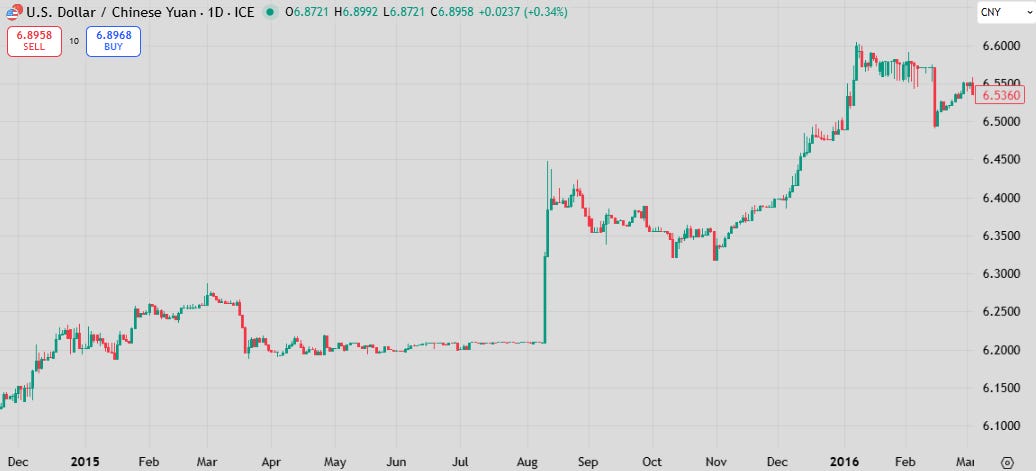
This prompted serious concerns about the health of the Chinese economy which had pursued an attempted rebalancing away from investment-led growth to consumption-led growth. Commodities plunged and global equities had a sharp 12-15% drawdown (equities were way more volatile/VIX more supressed in that day and age).
While equities recovered quickly back to their highs by early November, the CNY continued to depreciate, and the broader effect of a severe China slowdown took hold on EM especially.
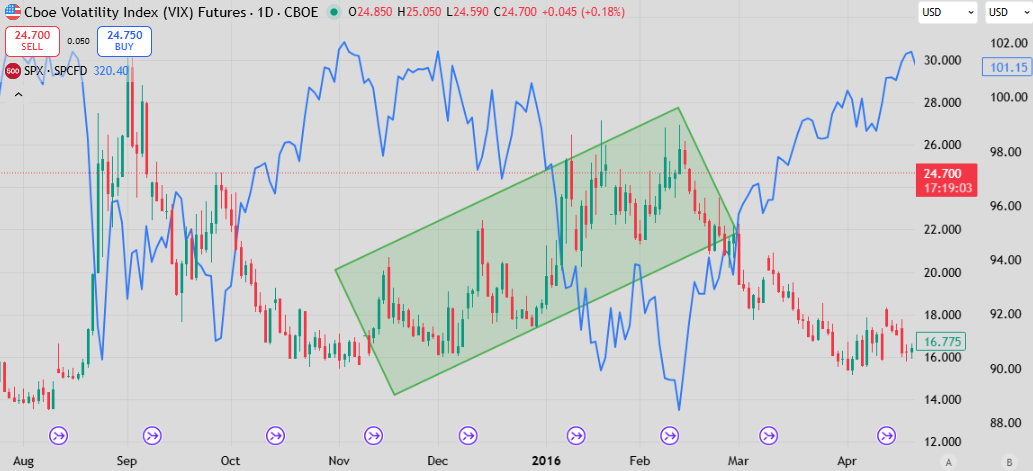
However, this didn’t fully materialise until equities fell again in January 2016 by 10% again. November and December was volatile, trading in a ~4% range with VIX futures trending up.
What makes this episode unique is that implied volatility (represented through VIX futures) has been trending higher without a major shank lower in equities. This hasn’t really happened in the past as vol markets have tended to operate in a binary high/low fashion with quick and sharp drawdowns and subsequent recoveries.
Some interesting parallels lie in the timing (quarter end) and path that equities took. They eventually couldn’t hold off the pressure and the crack came.
Given the way things are going, it seems like equities will barely hold out until early April.
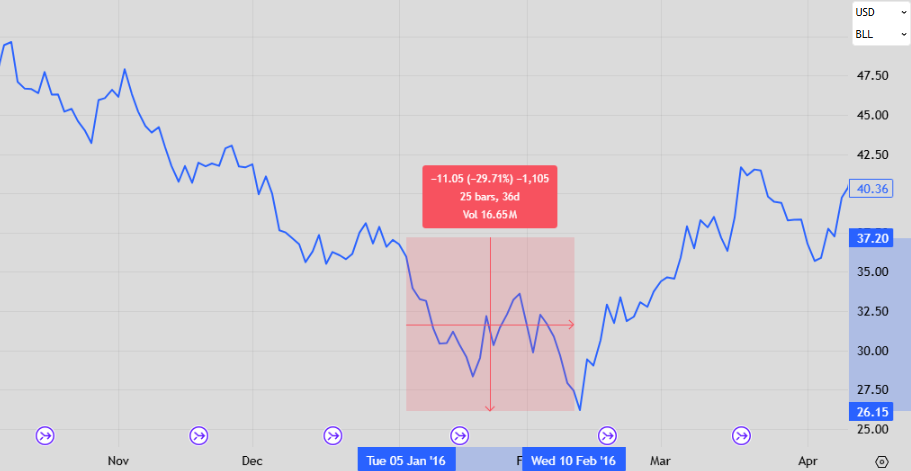
The main (if opposite) parallel was that it was oil that really drove the risk off in January 2016. After declining in an orderly fashion in the months preceding, they took another 30% leg down in January.
Oil big down and oil big up speaks the same level of economic health. The direction doesn’t matter.
The last week of March is important for developments in the war. Equities have been trading up with news that the US are making moves to open the Strait.

The above will likely arrive on March 25. That, combined with month end, will keep risk orderly. After that the dam breaks.
Correlation trap
Gold has performed very poorly, down over 10% this month.
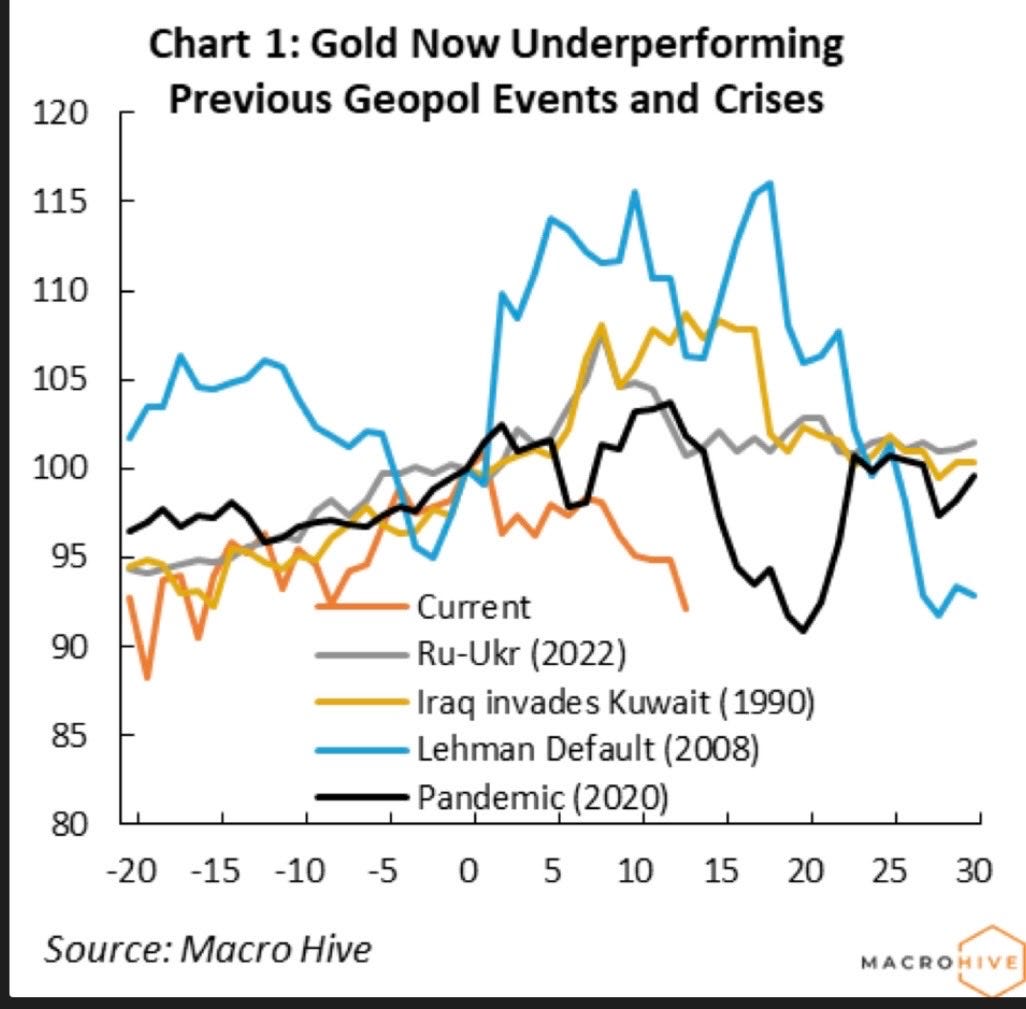
Most expect gold to do well in environments as these. Speculation is that it is ME/Asian selling, however this isn’t clear.
What it does show is that single macro asset return distributions are relatively static and don’t change often. This isn’t an unusually weak month for gold.
What it does show is that it is leaning on cross-asset correlations in a portfolio is what can get you undone. If you were holding gold as a hedge, you were probably too long equities at the same time.
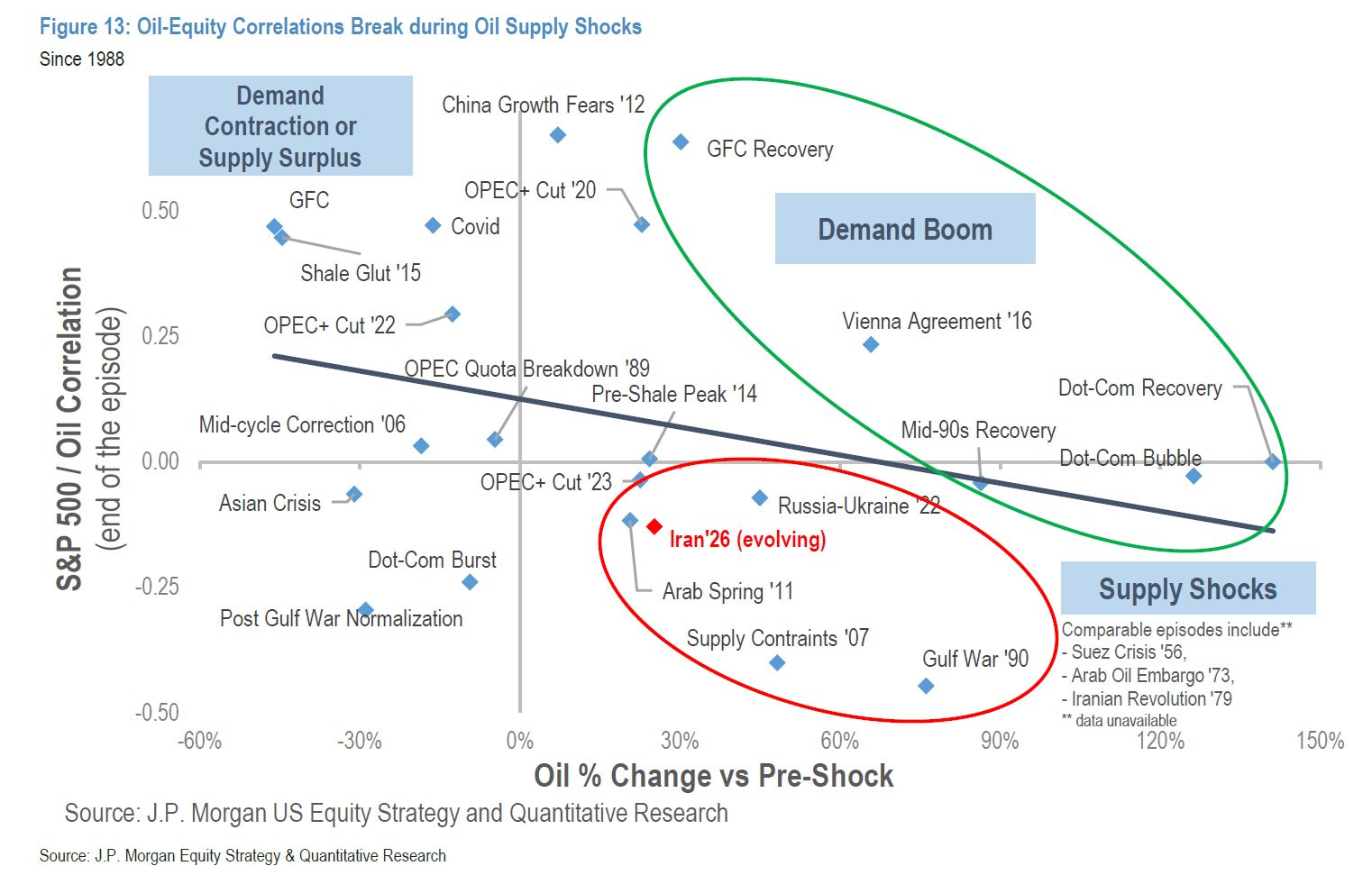
The chart above shows the oil-equities correlation in different oil environments. If anything, it shows that the damaging negative correlation can increase more if past episodes are a guide.