

Global growth has held amazingly well over the last 15 years given the trend deceleration in China’s contribution (of which it is meaningful as China is 20% of global growth on a PPP basis).
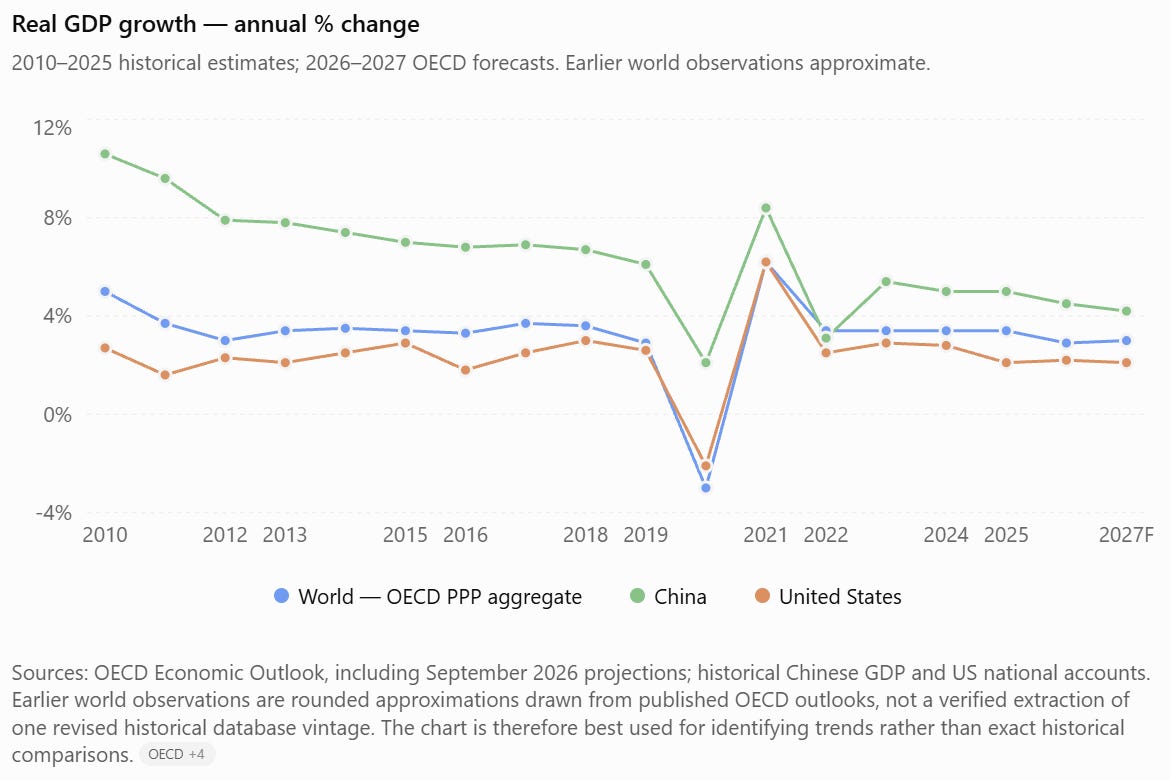
The trend is unmistakeable. From 10% GDP growth after the GFC to an outlook closer to 4% now, China’s growth engines have slowly sputtered out one-by-one to leave it all in on exports growth.
The late-90s and 2000s were all about urbanisation. Moving people from rural low-productivity settings to the cities where one person’s contribution to economic growth would multiply. True productivity gains were the lynchpin of the China miracle in during those years. Debt increased, but so did the productive base of the economy, so more debt was a positive sign rather than a negative one.
This growth drove a bullish global commodity cycle. China bought everything it could to feed its need for expansion. This is where command economies thrive; where the benefits of long-term planning win out against short-term profits and the effect of market gyrations. This had a major effect on commodity producing nations. China’s manufacturing base was growing, but only in the most basic and dirty industries. With very low wages, this was still extremely positive for growth.
Then 2008 (along with the 2011 Euro crisis) and China’s export engine took a hit. Demand cratered among western economies, causing a drop in growth. This was the first step towards the debt-funded property and infrastructure buildout that aimed to replace some of that lost growth. At the same time urbanisation started slowing, taking away another source of growth. The slowdown had started.
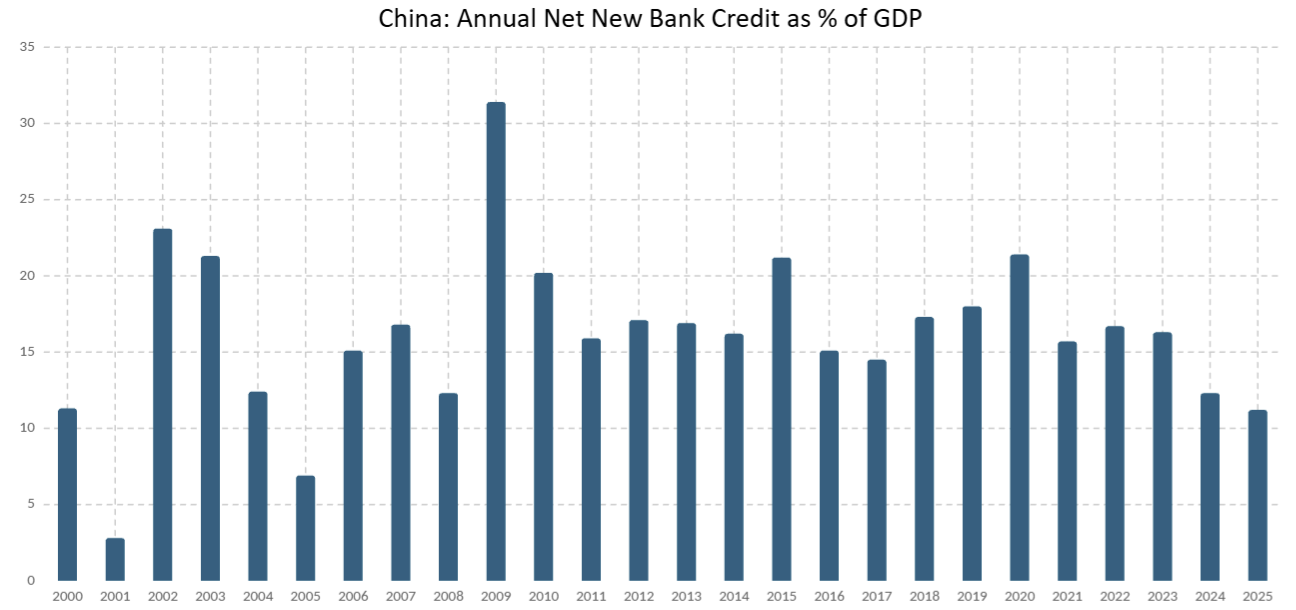
Bank loan growth was about 30% of GDP in 2009. The 2000s were over. Now debt was growing faster than nominal GDP was. The debt wasn’t paying for an increase in productivity growth anymore - only for a boost to growth from the initial construction. So, more construction had to happen every year.
The spike in 2015 was meaningful. Up until that point China was trying to rebalance the economy back away from property and infrastructure to domestic demand. This resulted in a growth crisis in late 2014/early 2015. While not in the official GDP numbers (of course) most proxies had growth sinking to <2% during that time. This scared the party, and the debt taps were turned back on.
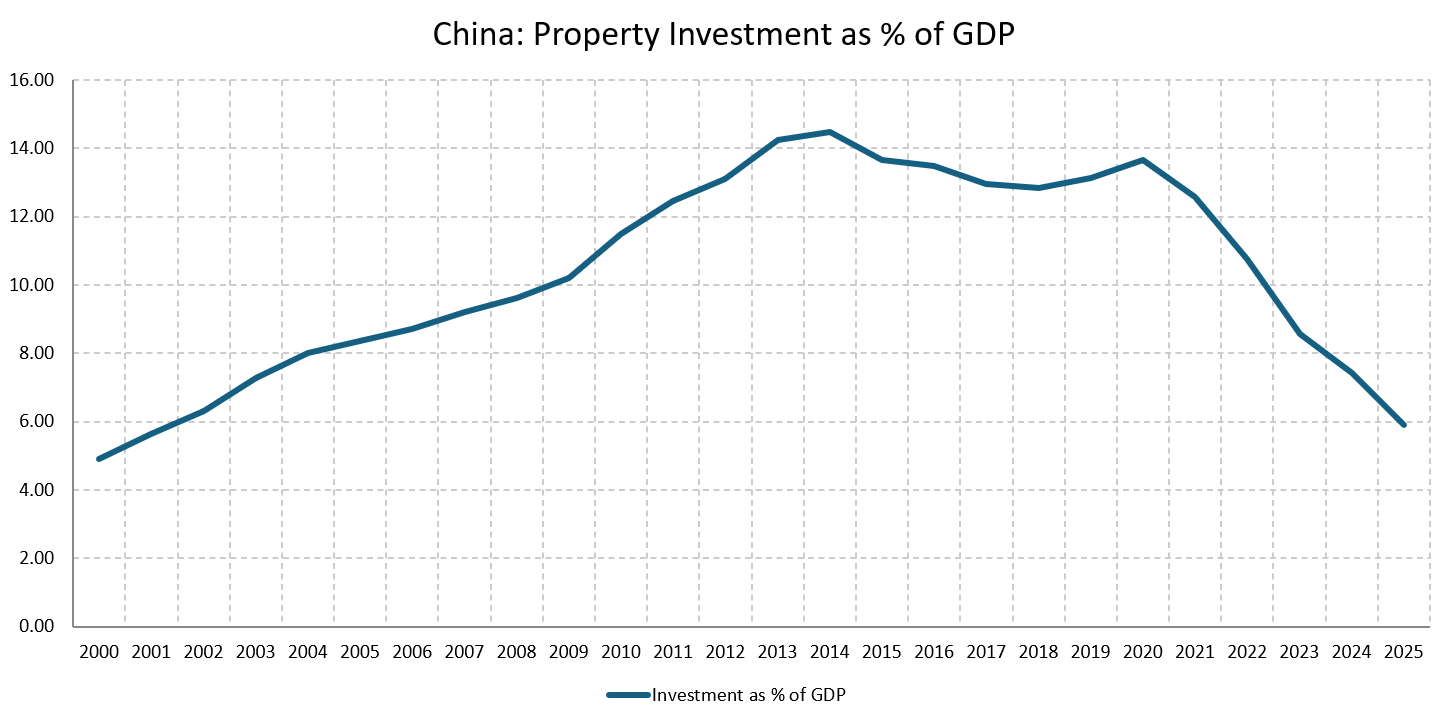
The pandemic was another spike in debt growth. This was also when the wheels started to fall off property, which has been in steep decline since then and hasn’t been able to be arrested. Investment in property construction is less than half of what it was. This is a huge gap to fill.

The consumer should be picking up the torch, but they are going the other direction.
Exports: the only lever left
Despite the sharp slowdown, credit is still growing faster than nominal GDP. It’s not going into property, infrastructure or households to finance consumption.
It’s going into the corporate sector to drive supply-side capacity growth and tech advancement, which isn’t being bought locally, so is dumped externally.
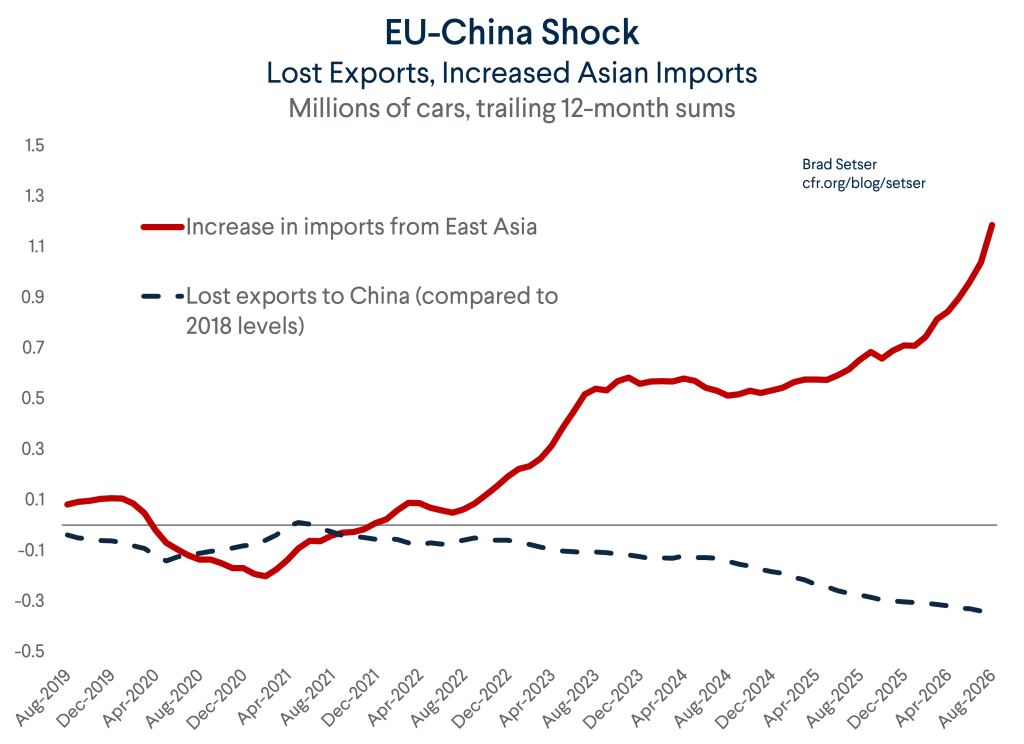
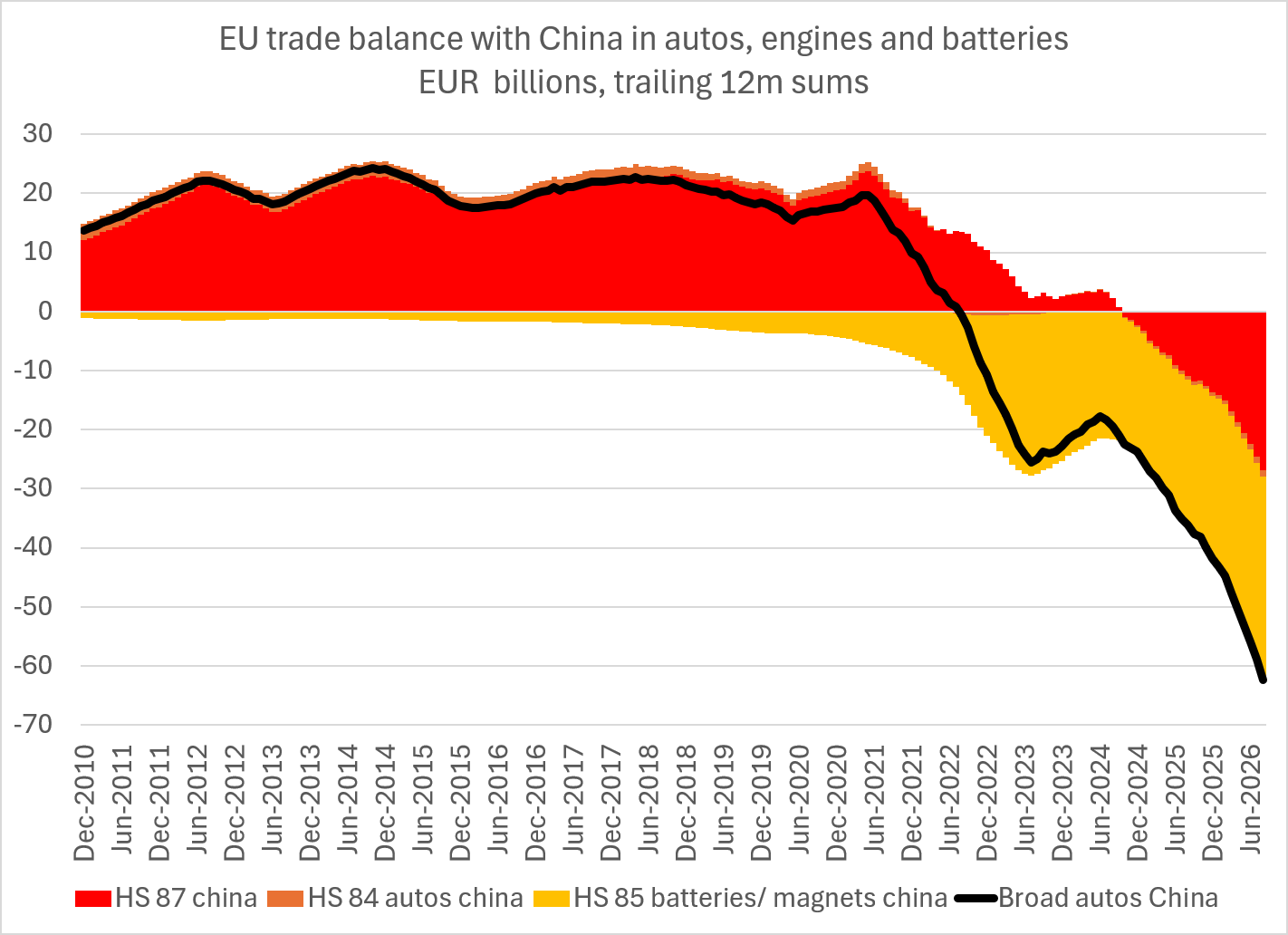
Any number of charts show the incredible growth of exports.
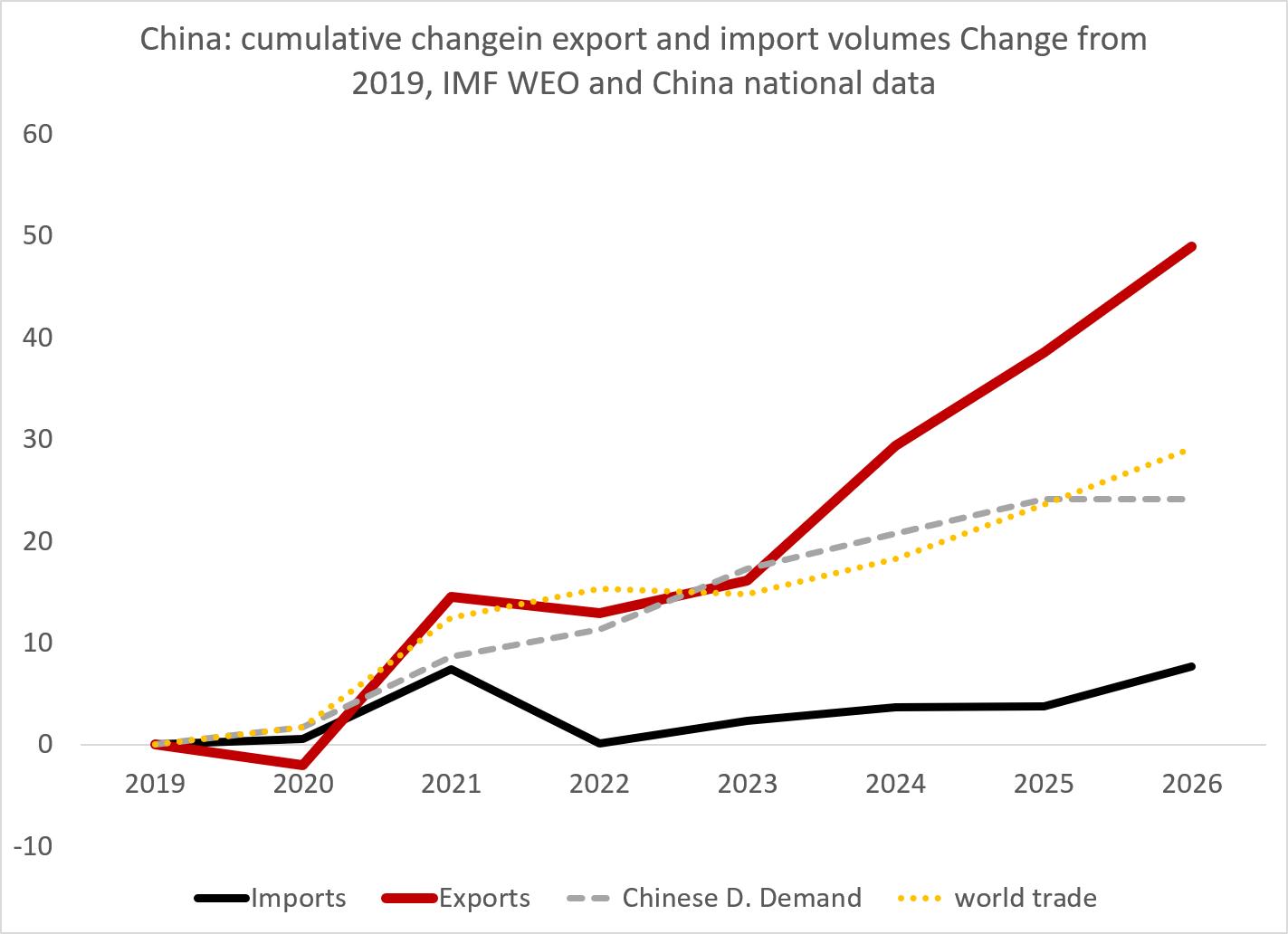
I’m not too sure how any of these countries could possibly sit on their hands while this is happening and China has basically not grown imports in 6 years!


EVs represent the apex of this strategy. Enormously complex, with a huge supply chain and manufacturing that is resource hungry…it is perfect to absorb excess supply from the decline in other resource hungry investment such as property and infrastructure. But even this is hitting a wall.


Like with nearly all other indicators of domestic activity, sales of EVs to Chinese are declining, and have been flat since the pandemic. Remember that consumer deleveraging from before.

Climbing exports means drop in demand can be made up for, keeping factories busy.
Exports keep on growing, but debt keeps on climbing even faster. When will the results of the export dominance actually come through for China as a whole? When you own 80%+ of every market (like with shipbuilding above), where is there to go?
Exports can keep on growing. Prices can come down; more markets can be cannibalised. It is vital to China’s ongoing survival that it does. It’s going to get harder and harder though.
Keep watching steel
There is no reckoning at the moment. The command economy is the prime candidate for the very slow decline into stasis.
Steel will tell you when to care about China

The decline in the “engine” of the Chinese economy – property – has been precipitous.
I wrote in this newsletter which covered a lot of the themes above in more detail. The conclusion was to just keep watching the inputs to the heavy industrial processes that the Chinese economy can’t seem to pivot away from - steel.
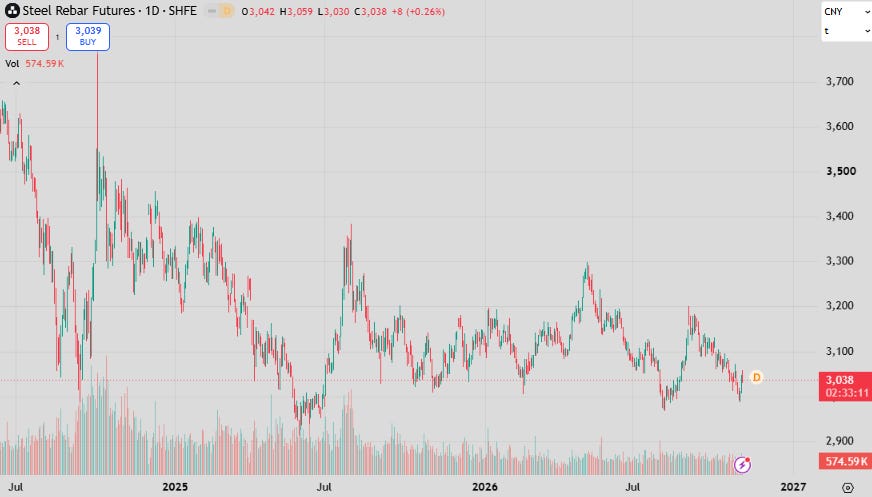
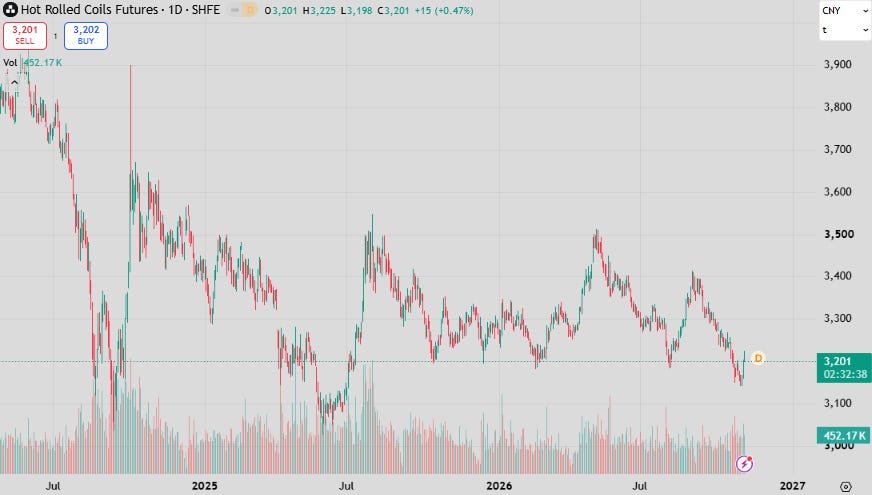
Both steel rebar (construction input) and hot rolled coil (auto manufacturing input) are trading at lows set since mid-2025. There is the odd pop here and there when stimulus is promised. Nothing has come of that, really.
Nothing convincing, but also not good-looking charts.
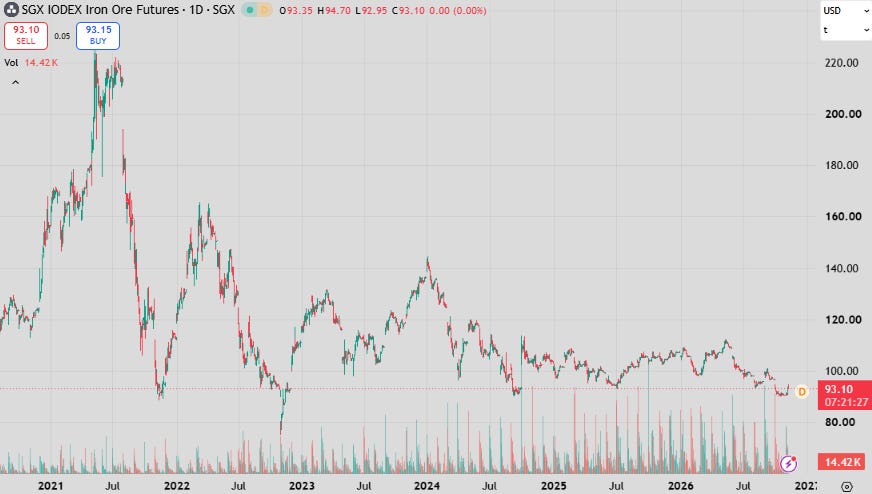
Spot iron ore, after trading most 2026 >$100/ton has taken a leg down and seems to be setting a new level.
Keep watching this complex. A break lower might come sooner than not, especially with the recent downgrades to expected EV production.
Stagnant equity markets
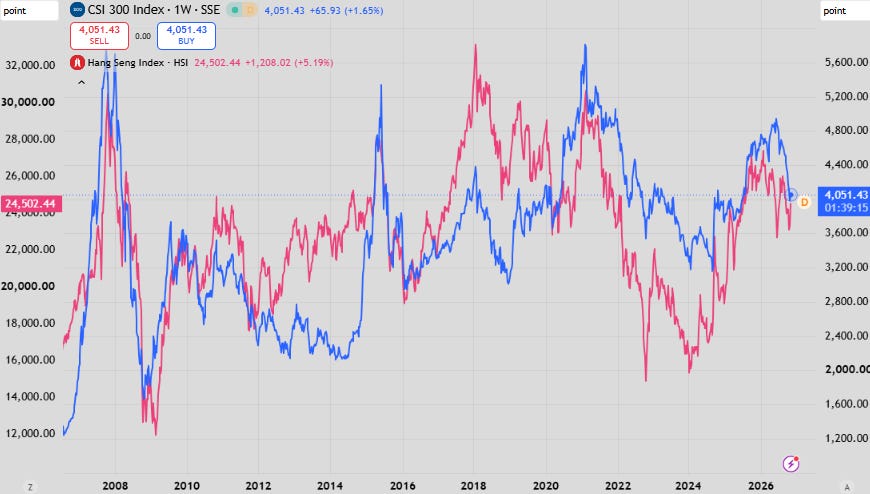
While you here scream of excitement that this year is the year for Chinese stocks…they never seem to breakout.
If you averaged in during 2007 so are stagnant in price terms today. the range is large +100% to -50%, but that doesn’t change that this is the same equity market as Japan’s lost decade.
Structural problems cause this. Shareholder unfriendliness and giving the float of successful companies away to friends and party members before normies can get any. Constantly large dilution hurts as well.
You will note that the big years are a year lead on the bank loan as % of GDP chart from earlier.
The failing 5-year plan
China has fallen off most people’s radars because of confidence given by the implicit 5% “line in the sand” for GDP growth of the last few iterations of the party’s 5-year plan. 2026 saw the drop to 4.5-5.0% which is still behind the ball.
What is there to worry about really? So what, growth falls from 5% to 4.2% over a few years. Everyone knows demographics are a problem. The slowdown has to come.
Since it can’t be the currency or their bonds or their equity market, the only external transmission vehicle is through commodities.
If iron ore falls further, economies such as Australia and Brazil and broader EM tumble. This has knock-on effects.
There is nowhere for incremental stimulus debt to go that doesn’t fix the core issue of lagging domestic consumption. Given deleveraging trends the opposite is happening, and it ensures a constant slide towards 2% growth and trouble for resource dependent countries.
This is present situation of China...Can you write a follow up that forecasts it's future 5-10 years from now... That would be really helpful
Moreover rise in China's current account surplus is leading to US fiscal deficit (the choice US willing to take) or else economy slows... What happens when nearly two giants 45% of global economy are so interwinted and slows together
Just in time when the Australian housing market is starting to crater…